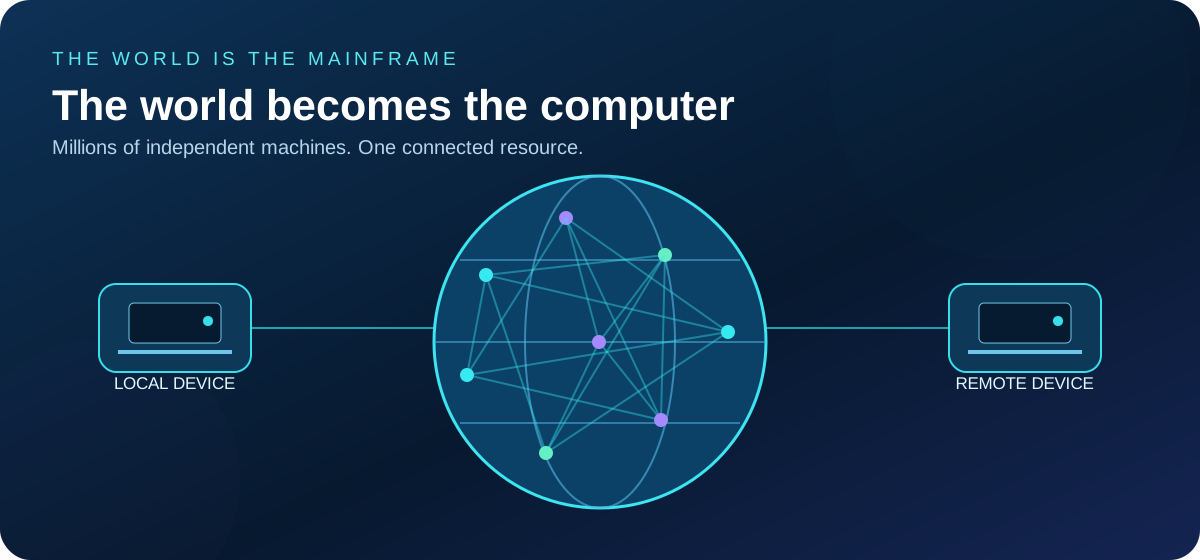
CONCEPT 01
A world of connected machines
Distributed participants form a shared resource rather than depending on one central server.
Concept and design by Christopher Crawford
What if we stopped building ever more isolated computing infrastructure — and started sharing the immense capacity we already own?
Computers across the world already hold enormous amounts of storage and processing capacity. Much of that capacity is unused at different times. This concept proposes treating it as a shared, resilient global resource, available to people and businesses when they need it.
Each participant keeps control of their own machine. Spare capacity can be contributed when available, then reclaimed when needed. The network reallocates work and maintains redundant data copies as nodes join and leave.
Distributed participants form a shared resource rather than depending on one central server.
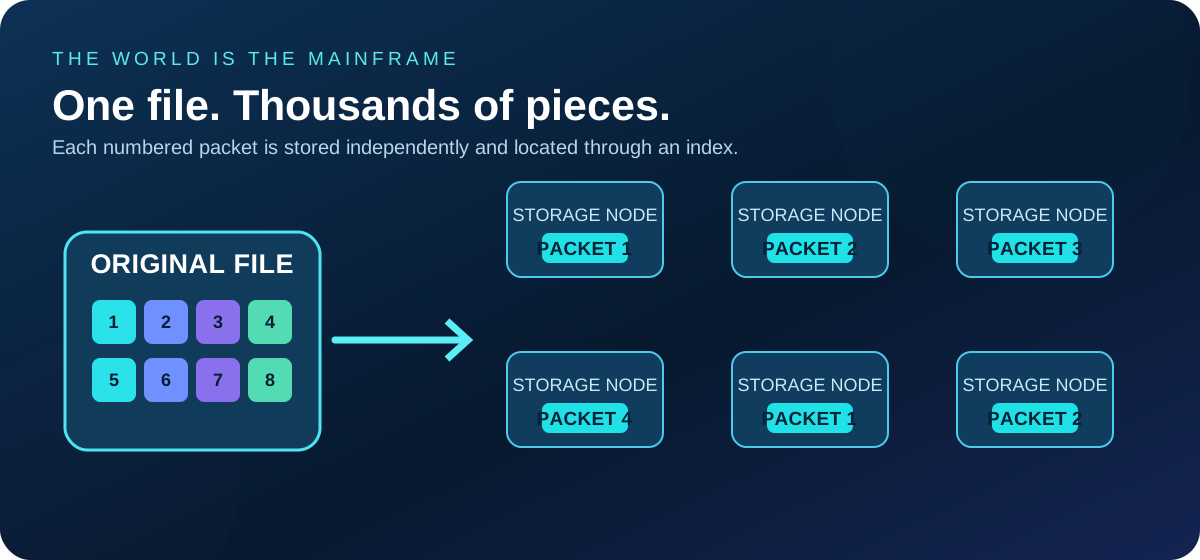
A file is divided into identified pieces with a structure describing their correct order and locations.
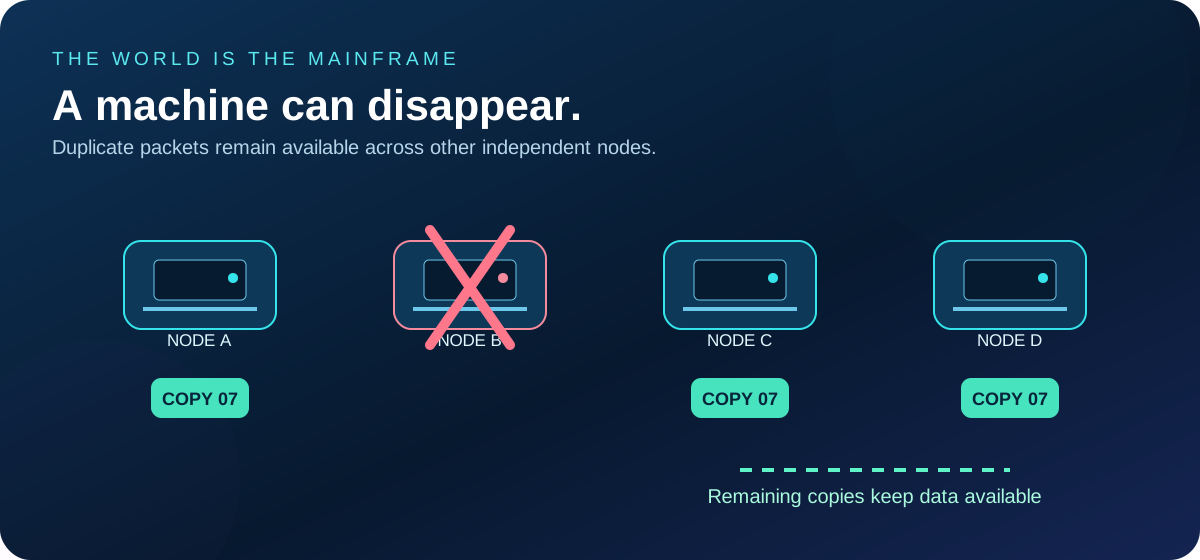
Small packets are replicated. When one machine disconnects, surviving copies keep the data recoverable.
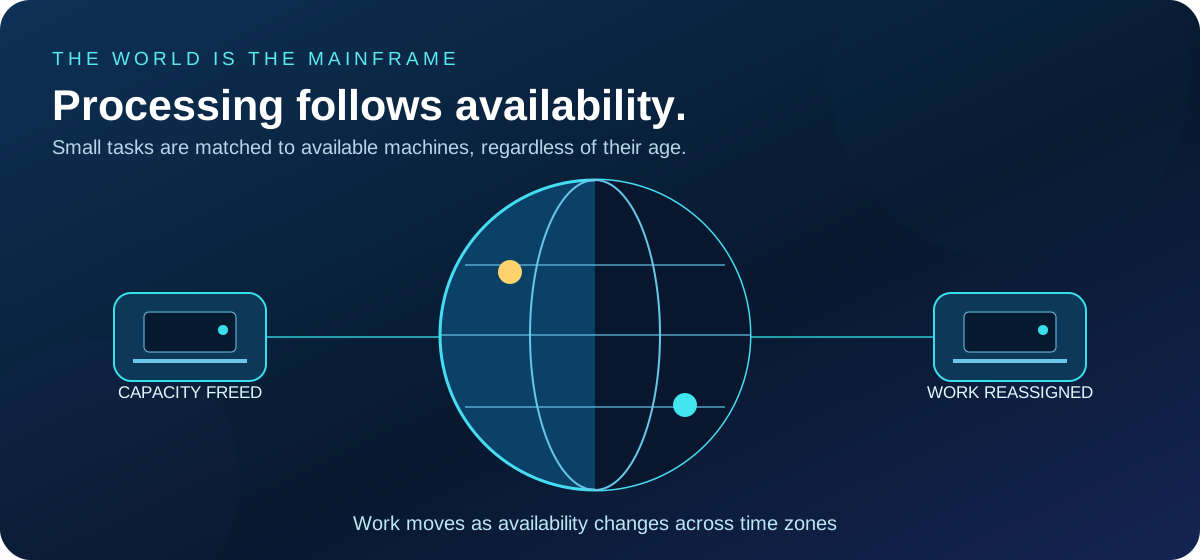
Work can move to available computers across time zones, with tasks sized to each machine.
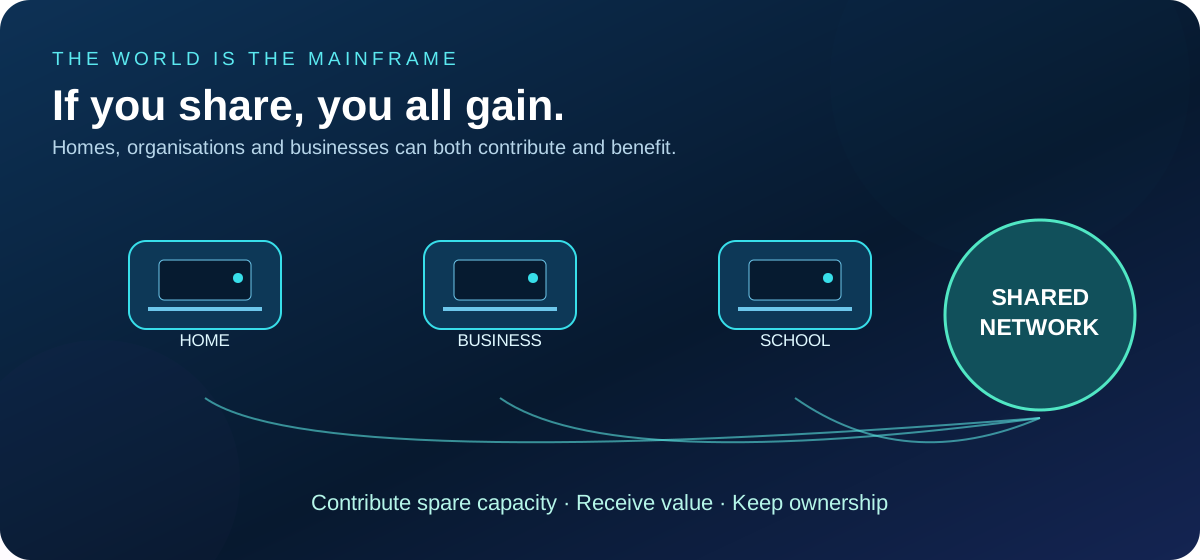
Individuals and organisations can contribute unused resources and receive value in return.
Sharing your personal computer may feel uncomfortable. There is another option: repurpose an old laptop or PC as a dedicated network contributor. Remove your personal data securely, install a minimal supported system and isolated network client, then connect it to the network.
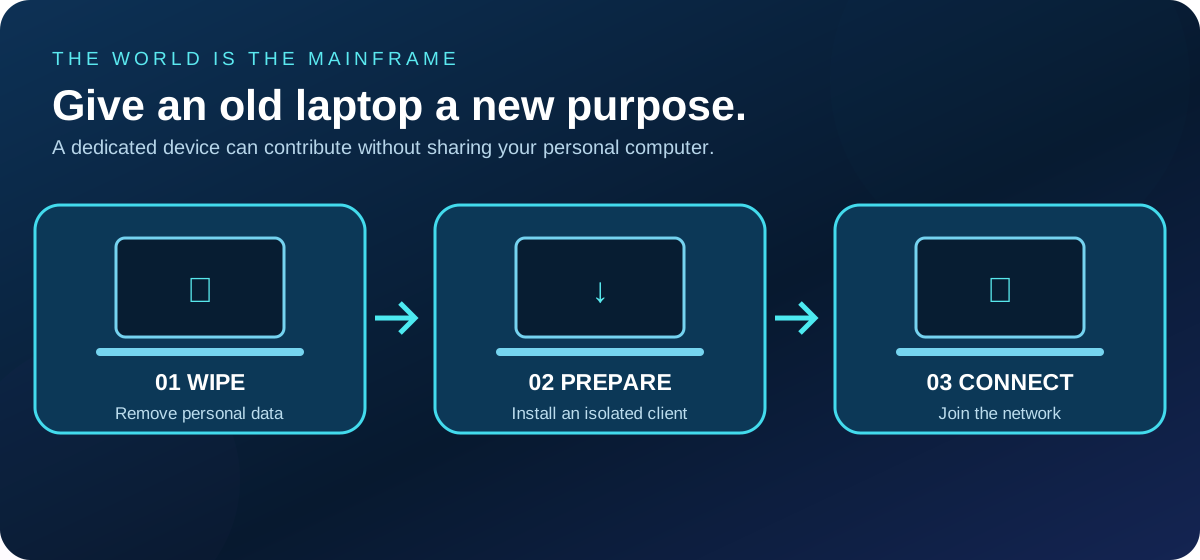
Your personal machine stays personal. A separate device provides storage or processing capacity without requiring you to share the computer you use every day. Strong isolation, encryption, access controls, software updates and network safeguards would still be essential; wiping a device alone does not guarantee security.
Old hardware can be useful, but its power consumption and reliability must be assessed so reuse delivers a genuine benefit.
Why build ever more dedicated infrastructure before making better use of the computers and storage humanity already owns? The World Is the Mainframe proposes a shared network that could reduce demand for new data-centre capacity by putting otherwise idle resources to work.
Potentially defer some new buildings, servers and associated material demand by using available capacity first.
Give existing hardware useful work during idle periods, while measuring its extra electricity and cooling needs.
Let participants earn from spare capacity and access computing resources without owning every machine themselves.
The practical challenge: Distributed computing is not automatically greener or cheaper. Network transfers, replication, security, uptime, energy use and performance must be assessed against efficient data centres. Some specialised workloads will continue to need dedicated facilities. The aim is to reduce unnecessary new infrastructure wherever shared capacity can do the job reliably.
Homes, schools and businesses can contribute spare disk space and compute cycles. Smaller tasks can be matched to older or less powerful machines; larger workloads can be split where technically possible.
Data must be encrypted and replicated; packet locations must remain discoverable; incomplete tasks must be reassigned. Bandwidth, electricity, trust, coordination overhead and workloads that cannot be parallelised determine where this approach makes economic sense.